
Travel to Patagonia by ferry: A complete guide to an unforgettable voyage
October 14, 2026
There is a moment, somewhere on the second day at sea, when you stop checking the time. Your phone barely gets a signal, the scenery changes by the hour, and the ferry glides at its own pace through channels that seem to have no end. That is what it means to travel to Patagonia by ferry: it is not just a way of getting between two points on the map, it is a different way of understanding the trip itself.
If you are planning a trip to Patagonia and wondering whether it is worth reaching Puerto Natales or Puerto Montt by sea, this guide explains how the voyage works, what to expect onboard and how to prepare for one of the most impressive navigation routes in South America.
Why travel to Patagonia by ferry?
Traveling by ferry through Chilean Patagonia means sailing through channels, fjords and narrow passages that no road reaches. It is a way to connect Puerto Montt with Puerto Natales by moving through insular Patagonia, a landscape where the Southern Patagonian Ice Field, glaciers and austral wildlife are part of the everyday scenery, not a separate excursion.
What is a Patagonia ferry trip?
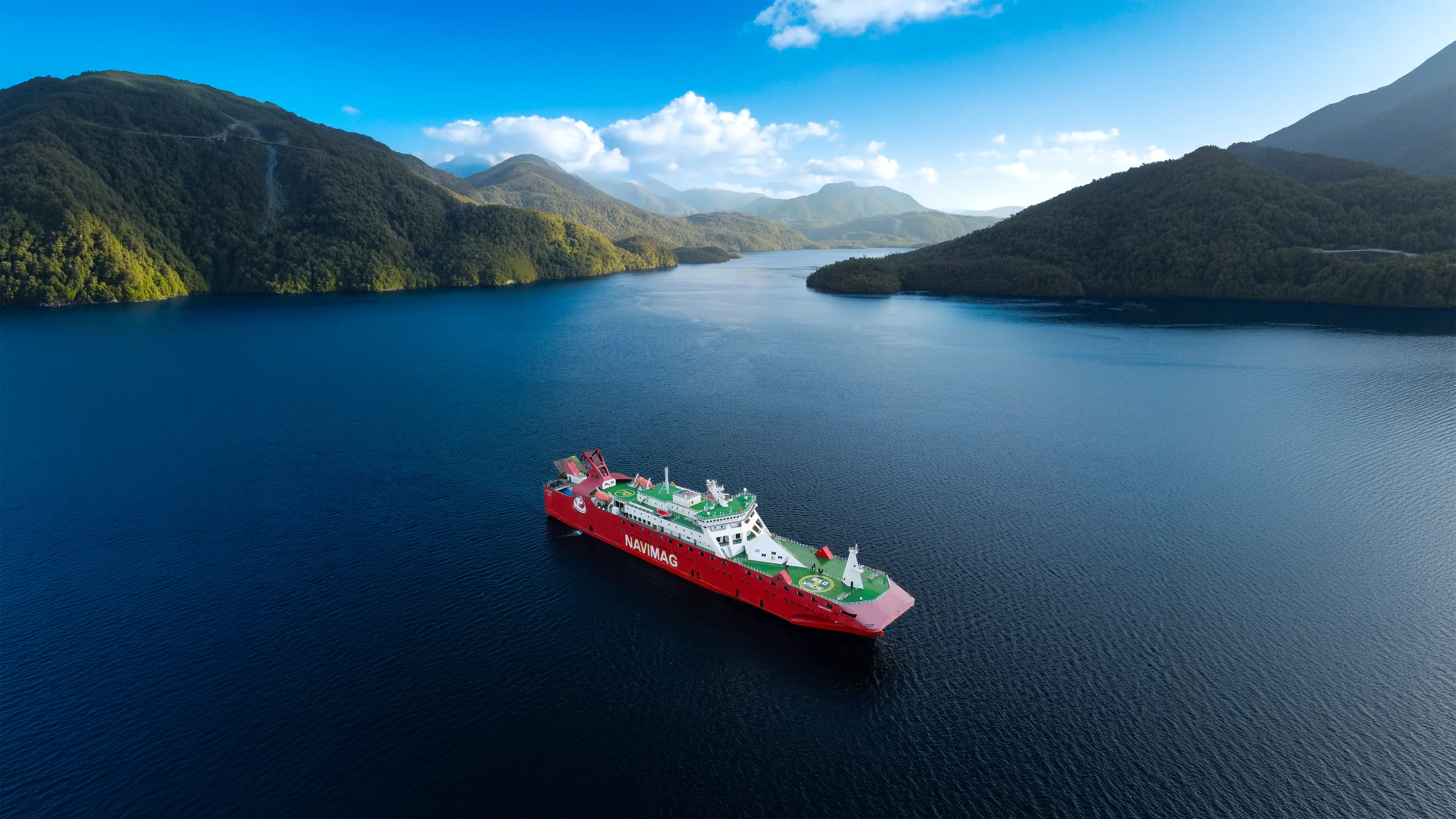
A Patagonia ferry trip is a multi-day sea voyage between Puerto Montt and Puerto Natales aboard a cargo and passenger ship that sails Chile's southern channels. With Navimag, the Ferry Esperanza covers the route with lodging and full board included, and with the navigation itself at the heart of the experience.
A different kind of journey
Unlike a flight or a bus ride, the ferry turns the trip into the main event. There are no tourist stops or scheduled shore excursions (apart from a brief stop at Puerto Edén).
What you get is real navigation: the captain chooses the route according to conditions in the Gulf of Penas or the Moraleda Channel, and three outdoor decks let you watch the Reloncaví Sound, the Messier Channel or the Angostura White go by, a passage only 80 meters (about 260 feet) wide. To learn what you will see along each stretch, read our guide to the Patagonian channels and ferry route.
Travel at a different pace
On Navimag, the voyage is not a transfer between point A and point B: the journey is the destination. For 4 days and 3 nights (or 3 days and 4 nights in the opposite direction), the ferry becomes your home base, your dining room, your viewpoint and, for many travelers, the place where they finally disconnect. Connectivity is limited along much of the route, and far from being an inconvenience, that is part of what makes the trip memorable.
How the Navimag ferry works
To plan your voyage well, it helps to know the routes, the cabins and the fares. These are the key facts about the Ferry Esperanza, which connects Puerto Montt and Puerto Natales and carries up to 244 passengers and 5,000 tons of cargo, including vehicles.
Available routes
The main route runs between Chile's Los Lagos and Magallanes regions:
- Puerto Montt → Puerto Natales: 4 days / 3 nights, departing every Friday.
- Puerto Natales → Puerto Montt: 3 days / 4 nights, departing every Tuesday.
The main season runs from October to March, when you also have bilingual guides onboard (Spanish and English).
Cabin types
Every Navimag cabin includes a private bathroom, lockers, bed linens, a towel and toiletries.
Fares and discounts
Fares start at approximately USD 530 per person and vary by cabin type, season and number of occupants; the price includes lodging and full board. Children ages 3 to 12 get a 50% discount, and children under 3 get an 80% discount (they must travel in a private cabin).
What is included onboard
Your ticket includes lodging and full board (breakfast, lunch and dinner). Onboard you will find a cafeteria and dining room, an activity room, a gym and yoga room with guided classes, an infirmary with permanent staff, an elevator and a shop where you can pay in Chilean pesos or US dollars, in cash or by card.
You can also bring your vehicle (car, pickup, motorcycle or camper trailer) and your pets, which travel in the cargo area in a special crate. If you travel with a bicycle, it is carried for an additional fee (USD 60 or CLP 50,000) and requires prior contact with Navimag.
Tips for planning your voyage
These tips will help you arrive prepared and enjoy every stretch of the route:
- Book early, especially if you travel in high season (October to March), when demand is higher.
- Treat the weather as part of the trip, not as a surprise: Patagonia's weather is changeable, and the captain may adjust the route depending on open-sea conditions in the Gulf of Penas. To choose your dates well, read our guide to Patagonia weather and the best time to visit.
- Pack ahead of time: we have a Patagonia packing list.
- Combine your voyage with the Carretera Austral or Torres del Paine National Park, just 115 km (about 71 miles) from Puerto Natales.
- Arrange special diets (vegetarian, allergies) when you book.
Frequently asked questions
Before you book, these are the questions travelers planning their first voyage ask us most often.
How long is the ferry trip through Patagonia?
The Puerto Montt to Puerto Natales voyage takes 4 days and 3 nights; in the opposite direction, 3 days and 4 nights.
What does a Navimag ticket include?
It includes lodging in your chosen cabin and full board (breakfast, lunch and dinner) for the whole voyage.
Can I travel with a vehicle?
Yes. The Ferry Esperanza carries cars, pickups, motorcycles and camper trailers, as well as passengers.
What is the best time of year to travel?
The main season runs from October to March, with bilingual guides onboard and the best overall sailing conditions.
Live the Voyage Through the Patagonian Channels
If you can already picture yourself on deck watching the Messier Channel or the Angostura White slide past, it is time for the next step. Check the route and fare information on the Navimag website, choose the cabin that best fits your trip and book early, especially if you plan to sail in high season. If you have questions, write to us at contact support
Discover Patagonia like a local
Download our free guides to make the most of your voyage through Patagonia, Chile.
Discover Patagonia like a local
Download our free guides to make the most of your voyage through Patagonia, Chile.